
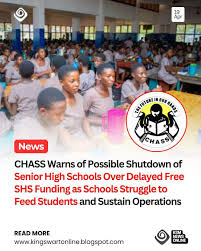
 CHASS Warns of Imminent School Shutdown Over Free SHS Feeding Crisis
Ghana’s flagship Free Senior High School (Free SHS) programme is facing renewed pressure as the Conference of Heads of Assisted Secondary Schools (CHASS) has warned of a possible nationwide disruption if urgent steps are not taken to address a worsening feeding crisis in public secondary schools.
The warning follows unsuccessful emergency engagements between CHASS and key stakeholders, including the Ministry of Education (Ghana), the National Food Buffer Stock Company, and the Ghana Education Trust Fund. Discussions aimed at resolving funding and supply challenges reportedly ended without a clear path forward.
Mounting Pressure on School Authorities
According to school heads, the crisis has been driven by persistent delays in the release of funds and irregular supply of essential food items. Perishable goods such as meat, eggs, and fresh vegetables have been particularly difficult to procure, leaving many schools struggling to maintain adequate nutrition for students.
Several headteachers are said to be relying on personal funds and credit arrangements with local suppliers to keep feeding programmes running—an approach they describe as unsustainable.
Threat to Academic Calendar
CHASS has cautioned that if immediate financial interventions are not made, schools may be left with no option but to suspend operations and send students home. Such a move could significantly disrupt the academic calendar and undermine preparations for key national examinations, including the West African Senior School Certificate Examination (WASSCE).
The potential shutdown could affect more than a million students across the country, raising concerns among parents, educators, and policymakers about the broader implications for Ghana’s education system.
A Critical Test for Free SHS
Introduced in 2017, the Free SHS policy has been widely regarded as a transformative initiative aimed at expanding access to secondary education by covering tuition, accommodation, and feeding costs. However, the current challenges highlight ongoing concerns about the long-term sustainability of the programme, particularly in relation to its funding and logistics.
Calls for Urgent Action
Education stakeholders are urging the government to prioritise the release of funds and streamline procurement processes to stabilise the feeding system. There are also calls for a more sustainable framework that ensures timely disbursement and efficient supply chain management.
As tensions rise, attention now turns to the government’s next steps and whether swift intervention can avert a full-scale disruption of the Free SHS system.












Leave a Reply