
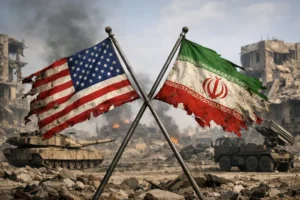
 Global Tensions Rise as Middle East Crisis Deepens and Economic Uncertainty Grows
April 19, 2026
The international landscape is facing heightened uncertainty as escalating tensions in the Middle East, combined with growing economic pressures, dominate global headlines and raise concerns over stability in the months ahead.
Middle East Conflict Intensifies
The situation between the United States and Iran has taken a dangerous turn following renewed confrontations over control of the strategically vital Strait of Hormuz. The passage, through which a significant portion of the world’s oil supply flows, has become a focal point of the crisis.
Iran’s decision to restrict movement through the strait has disrupted global oil shipments, triggering fears of rising fuel prices and supply shortages across international markets. The standoff has also intensified military activity in the region, with both sides adopting increasingly aggressive postures.
Casualty figures continue to rise, with reports indicating thousands of deaths as the conflict spreads beyond isolated incidents into a broader regional confrontation. Analysts warn that without urgent diplomatic intervention, the crisis could escalate into a wider war with global implications.
Global Economy Faces Renewed Pressure
The economic fallout from geopolitical tensions is already being felt worldwide. The International Monetary Fund and the World Bank have both issued warnings about slowing global growth, citing ongoing conflicts and energy market disruptions as key risk factors.
Global growth projections for 2026 have been revised downward, with economists cautioning that prolonged instability could further weaken recovery efforts following recent economic challenges. Developing economies, particularly in Africa and parts of Asia, are expected to bear the brunt of rising energy costs and inflationary pressures.
Security Concerns Escalate Worldwide
Beyond the Middle East, security concerns are mounting in several regions. Increased military deployments and naval operations have been reported, particularly in key international waters, as global powers seek to protect strategic interests.
Humanitarian conditions in conflict-affected areas are deteriorating rapidly. Aid operations in parts of the region have been disrupted, leaving vulnerable populations at greater risk. International organizations continue to call for ceasefire agreements and renewed diplomatic engagement to prevent further loss of life.
Diplomatic Efforts and Strategic Alliances
Amid rising tensions, diplomatic activity has intensified across multiple fronts. Countries are strengthening bilateral and multilateral ties in an effort to reinforce security cooperation and economic resilience.
High-level engagements between major economies are expected to focus on defense collaboration, energy security, and coordinated responses to global instability. Observers note that the effectiveness of these efforts will be crucial in determining whether the current crises can be contained.
Political Developments Across Regions
Political uncertainty is also shaping the global narrative. Several countries are experiencing internal challenges, including repeated elections and shifting parliamentary dynamics, reflecting broader instability in parts of Europe and beyond.
These developments underscore the growing complexity of global governance at a time when coordinated international action is increasingly necessary.
Outlook
The convergence of geopolitical conflict, economic strain, and political uncertainty presents a critical moment for the international community. The coming weeks are expected to test the strength of diplomatic institutions and the willingness of global powers to pursue de-escalation.
For many countries, including those in emerging markets, the impact of these developments will be closely felt through rising costs, trade disruptions, and shifting economic conditions.









Leave a Reply