
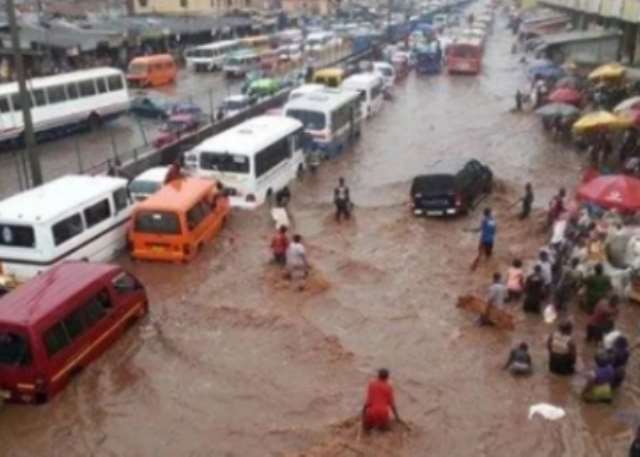
Accra Under Water: Deadly Floods Paralyse Ghana’s Capital After Torrential Rains Leave Communities Submerged
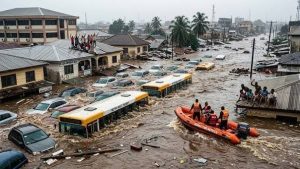
Accra has once again been brought to its knees after relentless overnight rains triggered one of the worst flooding incidents in recent years, leaving a trail of destruction across the Greater Accra Region.
The torrential downpour, which began late on Sunday, June 28, and intensified into the early hours of Monday, June 29, 2026, submerged major highways, flooded homes and businesses, stranded hundreds of motorists and commuters, and forced emergency rescue operations across several communities.
Among the hardest-hit areas were Weija, Mallam, Kaneshie, Achimota, Apenkwa, Tesano, Darkuman, Spintex, Madina, Atomic Junction, the N1 Highway, the Accra–Kasoa Highway, and sections of the Kwame Nkrumah Interchange, where traffic came to a complete standstill as floodwaters engulfed roads and vehicles.
Rescue teams from the Ghana National Fire Service, the National Disaster Management Organisation (NADMO), the police, and the military were deployed to rescue trapped residents and motorists. Authorities urged the public to avoid flooded roads, relocate from flood-prone communities where necessary, and use official emergency numbers instead of relying solely on social media for help.
As of Tuesday, authorities confirmed that at least 12 people had lost their lives, while hundreds had been rescued from rising floodwaters. Search and recovery efforts continued in several affected communities as emergency agencies worked to account for missing persons.
The Ministry of Health has also warned of a possible outbreak of waterborne diseases, including cholera, urging residents to avoid contaminated floodwater, boil drinking water where necessary, and maintain proper sanitation in the aftermath of the disaster.
The flooding has once again renewed calls for improved drainage infrastructure, regular desilting of gutters, stricter enforcement against building on waterways, and long-term flood mitigation measures to prevent the recurring devastation that accompanies Ghana’s rainy season.










Leave a Reply